
A workplace safety audit is a structured check of whether your health and safety program meets the laws that apply to you, and whether you can prove it. In Canada, that means measuring your practices against your province or territory’s OHS Act and regulations, or the Canada Labour Code if you work in a federally regulated field. A first audit usually takes careful preparation more than special expertise, and the main prerequisite is simple: your safety program has to exist on paper and in daily practice.
A solid program covers hazard controls, training, inspections, investigations and records. Auditors, whether they’re regulators, clients or COR® reviewers, want to see all of it working together.
This matters for everyone who shares a workspace, including people living with Multiple Chemical Sensitivities (MCS), for whom air quality and chemical exposure aren’t abstract concerns. A well-run audit can bring those issues into the open and put controls in writing. The steps below show you how to prepare, carry out and verify one.
What a Workplace Safety Audit Checks in Canada
Which Law Applies to Your Workplace
Most Canadian workplaces follow the occupational health and safety (OHS) law of the province or territory where they operate. In Ontario, for example, that means the Occupational Health and Safety Act, enforced by the Ministry of Labour, Immigration, Training and Skills Development. Federally regulated work, such as banking, interprovincial transport and telecommunications, falls under the Canada Labour Code instead.
If you aren’t sure which applies, start with the question of who regulates your employer’s industry. Then confirm it directly with your provincial or territorial OHS regulator, or with the federal labour program if the work is federally regulated. Doing this first keeps the rest of the audit pointed at the right rules.
Once you know your law, check it against your written policies. Our guide to workplace safety policy requirements explains what that paperwork should cover.
Voluntary recognition is a separate matter. In Ontario, IHSA COR® audits in Ontario sit on top of legal compliance, not in place of it.
Legal Compliance Versus COR® Certification
Meeting legal requirements and earning COR® recognition are two different things. Legal compliance means following the occupational health and safety laws that apply to your workplace, such as Ontario’s Occupational Health and Safety Act, and being able to prove it with records. That is the baseline every employer owes workers, whether or not they ever seek a certificate.
COR® (Certificate of Recognition) is a step beyond that baseline. It is voluntary, and in Ontario it is granted only by IHSA under the COR® 2020 standard. To earn it, a workplace must score at least 80% overall and at least 65% in every element. A strong result in one area can’t cover for a weak one.
Think of it this way: the law sets the minimum, while COR® measures how well your safety system is written down, used every day and backed by records. A workplace can be legally compliant without COR®, but it shouldn’t pursue COR® while ignoring legal gaps.
What You Need Before You Start: Tools, Documents and People
Before you walk a single hallway, gather what an auditor will want to see. The goal is a safety system that is written down, used every day, and backed by records. A compliance program generally includes hazard controls, training, inspections, investigations, and records, so your preparation should cover each of those.
Start with a simple pile of documents:
- Your written OHS policy and procedures.
- Hazard assessments for each area and task.
- Recent inspection reports and any follow-up notes.
- Training records showing who learned what, and when.
- Incident investigation files, including near misses.
- Records of worker concerns and complaints, and how each was handled.
- A copy of the OHS Act and regulations that apply to you, or the Canada Labour Code if your work is federally regulated.
Add a clipboard or tablet, a floor plan, and a blank corrective-action log so you can record gaps as you spot them.
Next, decide who takes part. An audit is not a one-person job. Bring in the employer or a senior manager, the joint health and safety committee or health and safety representative, and the supervisors who run daily work. Most important, talk with workers. They know what really happens on the job, and what is written does not always match it.
Make a point of including workers who raise concerns about air quality or scents. People with Multiple Chemical Sensitivity often notice problems with cleaning products, fragrances, or ventilation long before anyone else does. Listening to them early helps you find real hazards and shows that concerns are taken seriously.
Safety Warnings and Stop Points Before You Begin

An audit only helps if it’s done honestly, so a few cautions come first.
Don’t treat the audit as a paperwork exercise. Regulators, clients and COR® auditors look for a safety system that is written down, used every day and backed by records. A tidy binder that doesn’t match what happens on the job won’t hold up, and it won’t protect anyone.
Don’t wave away worker concerns. If someone raises a problem with air quality, a strong scent or a cleaning product, record it and follow it up. People should never be penalized for reporting a hazard. If workers fear speaking up, you’ll miss the very problems the audit exists to find.
Remember that the person walking the floor shares the space. An auditor may be breathing the same air as the workers, so plan visits with that in mind. Skip perfume, scented lotions and other fragranced products when you enter the workplace, and ask in advance whether anyone has specific needs. That small step shows respect and keeps the visit from causing the very problems you’re checking for.
Finally, know the limits. An audit does not replace a qualified professional’s assessment, and it isn’t medical or legal advice. If a worker has a health concern, they should speak with a health professional. If rights or accommodation are in question, a legal advisor is the right person to ask.
Step-by-Step: How to Conduct the Audit and Act on What You Find

Reviewing Paperwork and Walking the Workplace
Auditors rarely stop at the binder. They compare what your documents say with what actually happens on the job, because regulators, clients and COR® auditors all look for a safety system that is written down, used every day, and backed by records.
Start with the paperwork: policies, procedures, training records and inspection reports. Then walk the workplace and watch the work. Does the training on file match what people can describe? Do the controls in the hazard assessment show up on the floor? Ask workers directly, including anyone who has raised concerns about air quality or scents. Their answers often reveal gaps that paper can’t.
Here’s a practical order to follow:
- Confirm which OHS Act and regulations, or the Canada Labour Code, apply to your workplace.
- Check that a documented program exists, covering hazard controls, training, inspections, investigations and records.
- Do the formal review, comparing each written policy and record with real practice.
- Note every gap between the two, such as a missed inspection or an out-of-date procedure.
- Correct each gap and keep dated records of the fix, so you can prove ongoing compliance.
A policy nobody follows won’t satisfy an auditor, and neither will good habits with nothing written down.
Fixing Gaps and Keeping Proof
Once the audit shows gaps, turn each one into a corrective action. Write down what the problem is, who is responsible for fixing it, and a realistic date for completion. Give every item a single owner, even when several people help, so nothing is left waiting for someone else to act.
Keep the actions practical. If training records are missing, schedule the training and file the sign-in sheets. If a hazard assessment ignored cleaning products or scented items, update it and share the change with workers.
Then keep proof of every fix. Regulators, clients, and COR® auditors look for a safety system that is written down, used every day, and backed by records. A repair nobody can show is hard to count. Save dated copies of revised procedures, completed training, inspection reports, and notes on follow-up with the workers who raised the concern.
Review open items on a regular schedule until each one is closed and documented.
Making Your Audit Include Air Quality and Chemical Exposure Concerns
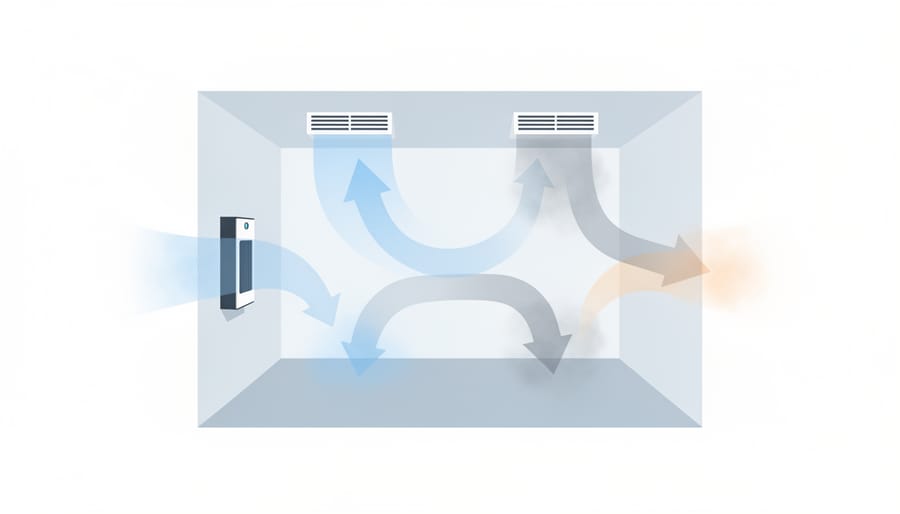
A good audit asks whether the safety system works for everyone in the building, including people who react to what’s in the air. For workers with Multiple Chemical Sensitivity (MCS) and others affected by indoor air pollution, small details in the written program can make a big difference day to day.
Start with the hazard assessments. Look at whether they actually cover cleaning products, scented products, renovation or painting work, and ventilation, rather than only the obvious machinery and slip hazards. Then check what happens when someone speaks up. A strong system records each air quality concern, shows who followed up, and notes what changed as a result.
Here are questions worth adding to your audit:
- Are chemical products listed and assessed?
- Is there a fragrance or product notice process?
- How are air quality complaints logged and resolved?
- Is there a clear, respectful accommodation process?
That last question deserves real attention. Auditors and regulators look for a system that is written down, used every day, and backed by records, and accommodation requests are part of that picture. Check that requests are handled consistently, that decisions are documented, and that workers aren’t treated unfairly for asking. If you want ideas for what workplace accommodations can look like in practice, that guide is a helpful starting point, even though it focuses on a different condition.
You don’t have to figure this out alone. Environmental Health Canada offers workplace support, and advocacy and legal support exist for workers who need help getting their concerns heard.
Checking Your Results and Planning Next Steps
An audit has worked when the gaps it found are actually closed, not just written down. Start there. Every corrective action should have an owner, a completion date and a record showing the fix was made. If an item is still open, it should say so plainly and have a new deadline.
Next, check the paperwork against what happens on the job. Training records, inspection reports and investigation files should be complete and easy to find, since regulators, clients and COR® auditors look for a safety system that is written down, used every day and backed by records. Then ask whether workers were consulted. If people who raised concerns about air quality or scents were never asked whether the changes helped, the follow-up isn’t finished.
Schedule your next review before you close this one. A fixed date keeps the work from fading, and a re-check is also wise after a major change such as a renovation, new cleaning products or a new process. For COR® recognition in Ontario, remember the thresholds: 80% overall and at least 65% in every element.
Bring in outside help when you’re unsure which law applies, when problems keep coming back, or when a worker’s accommodation is disputed. An OHS professional, your regulator or a legal advisor can each help. Workers and employers dealing with chemical exposure can also contact Environmental Health Canada for workplace support.
Frequently Asked Questions About Workplace Safety Audits
What is a workplace safety audit?
It is a structured check of whether your workplace meets the occupational health and safety (OHS) laws that apply to it, and whether you can prove it. Auditors look for a safety system that is written down, used every day and backed by records.
Which law applies to my workplace?
Most workplaces follow their province’s or territory’s OHS Act and regulations. Federally regulated work falls under the Canada Labour Code instead. In Ontario, for example, employers follow the Occupational Health and Safety Act.
What is COR® and is it required?
COR® is a Certificate of Recognition, and pursuing it is voluntary. It is separate from your legal duties. In Ontario, it is granted only by IHSA under the COR® 2020 standard.
What score does COR® 2020 require?
The standard requires 80% overall and at least 65% in every element. A strong total can’t make up for a weak element.
What records do auditors want to see?
Expect requests for proof of hazard controls, training, inspections and investigations. A good program keeps records for each of these, not just the written policy.
Where can a worker with MCS get help? Start by raising your concerns in writing with your employer, your joint health and safety committee or your health and safety representative. Environmental Health Canada offers workplace support, and our list of MCS resources can point you to advocacy and legal support when you need it.
Questions about your own situation are always worth asking. A health professional or legal advisor can speak to your specific circumstances in ways a general guide can’t.
A good workplace safety audit comes down to a simple test: is your safety system written down, used every day, and backed by records? When the answer is yes, you have something you can show regulators, clients and, most importantly, the people who work there. And it works best when workers are heard. The person who notices a lingering scent, a stuffy room or a cleaning product that leaves a coworker unwell often spots a gap before any checklist does.
You don’t have to fix everything at once. Pick one practical next step this week. Pull up your hazard assessment and see whether it covers air quality. Check that complaints are being recorded and followed up. Or sit down with a worker who has raised a concern and ask what would help.
If you’re living with Multiple Chemical Sensitivity, or supporting someone who is, you’re not alone in this. Environmental Health Canada can offer workplace support, so reach out when you’re ready.