

Workplace accommodations for MS are legally protected adjustments to your job environment or duties that help you manage symptoms like fatigue, mobility challenges, cognitive changes, or heat sensitivity while maintaining your professional responsibilities. In Canada, employers have a legal duty to accommodate employees with MS under human rights legislation, and most accommodations cost little or nothing to implement.
If you’ve recently been diagnosed with multiple sclerosis or your symptoms are making work increasingly difficult, you’re not alone in facing these challenges. Many people with MS continue successful careers with the right support in place. The question isn’t whether you deserve accommodation, it’s how to identify what you need and communicate it effectively to your employer.
The process starts with understanding which symptoms affect your work most significantly. Fatigue might require flexible start times or regular rest breaks. Cognitive fog could mean written instructions instead of verbal ones. Heat sensitivity might need a personal fan or cooler workspace. Mobility issues could involve accessible parking or ergonomic furniture.
Your employer cannot legally refuse accommodation unless it creates undue hardship, a high legal threshold that rarely applies. They can, however, struggle to understand invisible symptoms or resist changes due to misconception. This is where clear documentation from your healthcare provider and knowledge of your rights become essential tools.
The strategies that help people with MS navigate workplace accommodations share common ground with approaches used by individuals managing other chronic conditions. People living with Multiple Chemical Sensitivity, for instance, also face invisible symptoms requiring environmental modifications and often encounter similar resistance from employers who don’t fully understand their needs.
This article provides specific accommodation examples organized by symptom type, the exact steps for requesting support, sample language for difficult conversations, and what to do when employers push back.
Understanding Your Legal Rights to Workplace Accommodations
In Canada, employees living with MS have strong legal protections ensuring access to workplace accommodations. Understanding these rights empowers you to advocate effectively for the support you need to continue your career.
The foundation of these protections lies in human rights legislation at both federal and provincial levels. The Canadian Human Rights Act covers federally regulated workplaces, including banks, telecommunications, and transportation, while provincial human rights codes protect employees in most other sectors. All this legislation recognizes disability as a protected ground, meaning employers cannot discriminate based on your MS diagnosis or symptoms.
Central to these protections is the duty to accommodate for disability which requires employers to modify work conditions, schedules, or environments so employees with disabilities can perform their jobs. This isn’t a favour or optional gesture, it’s a legal obligation. Employers must work with you to identify and implement reasonable accommodations that address your specific MS-related challenges.
The accommodation process should be interactive and collaborative. You don’t need to have all the answers or know exactly what modifications will work best. Employers must participate in good faith, exploring options together with you and considering your input about what helps you work effectively. They cannot simply dismiss requests or claim accommodations are too inconvenient without proper justification.
These same legal principles apply to workers with Multiple Chemical Sensitivity facing workplace barriers from scented products, building materials, or air quality issues. The duty to accommodate extends across disabilities, ensuring Canadians can participate fully in the workforce regardless of their health conditions.
Your privacy matters too. While you may need to provide medical documentation confirming your need for accommodations, you’re not required to disclose your complete medical history or every detail about your MS symptoms. You control what information you share beyond what’s necessary to establish the connection between your disability and the requested modifications.
Common MS Symptoms That Impact Work Performance
Multiple Sclerosis affects the central nervous system in ways that can significantly disrupt daily work tasks, even when symptoms aren’t visible to colleagues or supervisors. Understanding how these symptoms manifest in a work environment is the first step toward identifying effective accommodations.
Fatigue stands as one of the most debilitating MS symptoms in workplace settings. This isn’t ordinary tiredness that improves with rest, it’s an overwhelming exhaustion that can strike without warning and make even simple tasks feel impossible. Employees might need to leave meetings early, struggle to maintain focus during afternoon hours, or require frequent breaks to manage energy levels throughout the day.
Cognitive challenges, often called “brain fog,” affect concentration, memory, and information processing. An employee with MS might take longer to complete reports they previously handled quickly, forget details from morning meetings by afternoon, or need instructions repeated or provided in writing. These issues fluctuate, someone might function well one day and struggle significantly the next.
Mobility limitations vary widely among individuals with MS. Some experience mild weakness or coordination problems, while others need assistive devices like canes or wheelchairs. Navigating long hallways, climbing stairs, or standing for extended periods during presentations can become genuinely difficult, not just inconvenient.
Vision problems create practical workplace barriers. Blurred vision, double vision, or temporary vision loss make reading documents, working at computer screens, or driving to client meetings challenging and sometimes dangerous.
Heat sensitivity, one of the common heat sensitivity symptoms in MS, causes existing symptoms to worsen in warm environments. A comfortable office temperature for most employees might trigger fatigue, weakness, or cognitive difficulties for someone with MS. Even brief exposure to heat, walking across a sunny parking lot or sitting near a window, can temporarily intensify other symptoms.
These symptoms rarely occur in isolation. Most employees with MS manage several simultaneously, and symptom severity changes day to day, making consistent work performance difficult without appropriate accommodations.
Essential Workplace Accommodations for MS

Accommodations for Fatigue Management
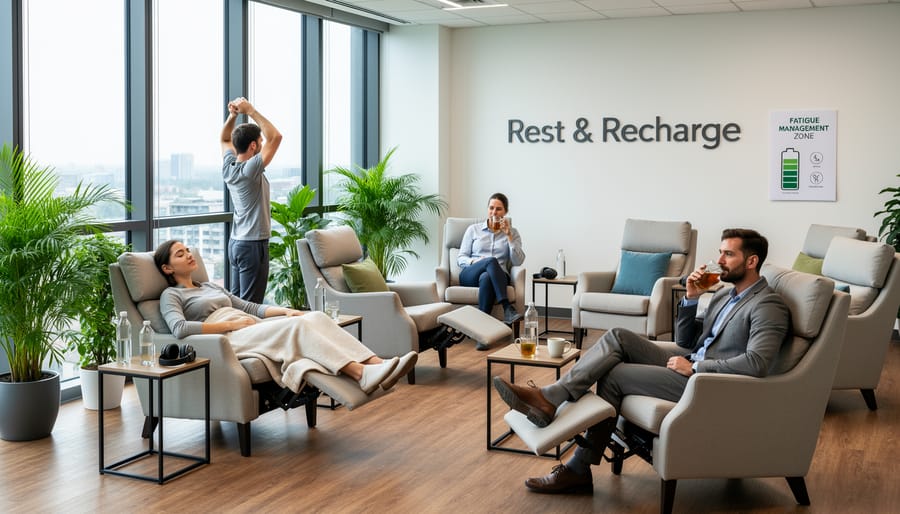
Fatigue ranks among the most disabling MS symptoms in professional settings, often invisible to colleagues and supervisors yet profoundly limiting. The unpredictability makes it particularly challenging, energy levels can shift dramatically day to day or even hour to hour.
Flexible start and end times give employees control over when they work during their peak energy periods. Some people with MS function best in early morning hours; others need to start later after morning stiffness subsides. This flexibility proves especially valuable for managing medication schedules and medical appointments without depleting limited energy reserves.
Scheduled rest breaks throughout the day prevent the cumulative exhaustion that derails productivity. A 15-minute rest every two hours, taken in a quiet space away from the desk, allows the nervous system to recharge before fatigue becomes overwhelming. These breaks differ from typical coffee breaks, they require genuine rest, not social interaction.
Remote work eliminates the energy drain of commuting and office distractions. Working from home two or three days weekly can mean the difference between completing a full workweek and needing disability leave. For some employees, a permanent remote arrangement becomes necessary as MS progresses.
Reduced hours or compressed workweeks offer another solution. Four six-hour days may yield better results than five eight-hour days when fatigue compounds across the week. Job sharing arrangements split responsibilities between two part-time employees, maintaining coverage while preserving your career involvement.
Physical and Mobility Accommodations
MS can affect balance, coordination, and strength, making physical navigation of a workplace genuinely challenging. Reserved parking close to building entrances reduces walking distance and conserves energy for the workday itself. Many employees find that an assigned spot eliminates the stress of circling for parking when fatigue or mobility issues make extra steps difficult.
Inside the building, sit-stand desks let you change position throughout the day, which helps manage both fatigue and circulation issues. An ergonomic chair with proper lumbar support and adjustable height prevents additional strain. If you use mobility aids like a cane or walker, your workspace needs enough room to maneuver comfortably without squeezing between furniture or colleagues.
Assistive technology makes a real difference: voice-activated software reduces typing strain, ergonomic keyboards and mice accommodate hand weakness or tremors, and monitor risers bring screens to eye level without neck strain. For those with hand dexterity challenges, adaptive tools like button hooks, jar openers, or modified door handles remove small daily obstacles that drain energy.
Building modifications matter too. Automatic door openers, accessible restrooms near your workspace, ramps instead of stairs for key routes, and properly maintained elevators remove barriers that shouldn’t exist in the first place. These changes benefit everyone, not just employees with MS.
Cognitive and Communication Support
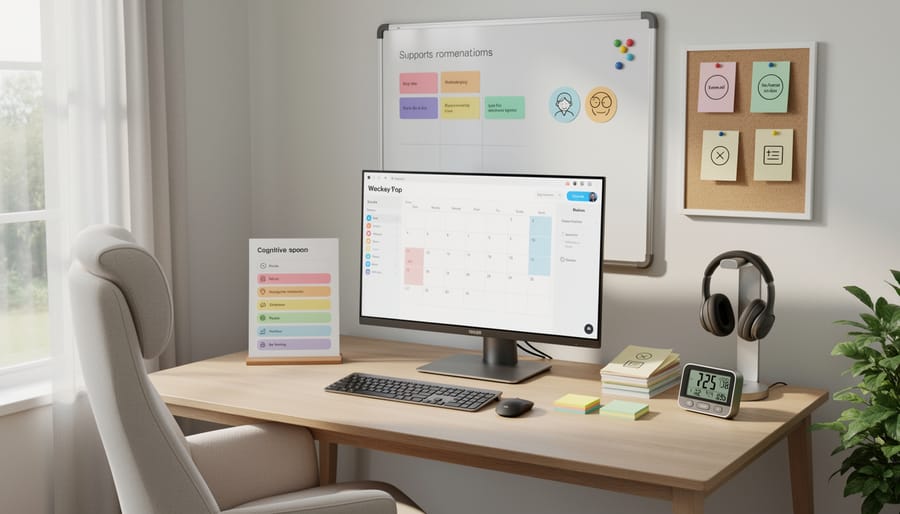
MS can disrupt memory, concentration, information processing speed, and word-finding ability. These cognitive symptoms often remain invisible to colleagues yet significantly impact job performance. The right workplace support transforms these challenges into manageable obstacles rather than career barriers.
Written instructions eliminate the stress of trying to remember verbal directives. Request that supervisors provide task assignments, meeting notes, and procedural changes in email or documented formats you can reference repeatedly. This simple shift reduces cognitive load and ensures accuracy.
Task prioritization becomes difficult when MS affects executive function. Ask your employer for project management tools, clearly defined deadlines with built-in buffer time, and regular check-ins to confirm you’re focusing on the right priorities. Breaking large projects into smaller milestones with specific due dates prevents overwhelm and improves completion rates.
Quiet workspaces or noise-cancelling headphones filter out distractions that magnify cognitive fatigue. An office with a door, a cubicle away from high-traffic areas, or permission to work from home during cognitively demanding tasks helps maintain focus and productivity.
Memory aids like digital reminders, voice recorders for meetings, and note-taking apps compensate for MS-related forgetfulness. Recording important conversations (with permission) ensures you capture details accurately without the pressure of real-time retention.
Deadline flexibility accommodates the unpredictable nature of MS symptoms. Some days your cognitive function will be sharp; others, brain fog makes complex work nearly impossible. Flexible deadlines let you deliver quality work matched to your good days rather than forcing output during flares.
Environmental and Sensory Accommodations

Environmental factors can trigger or worsen MS symptoms, making certain workplace conditions particularly challenging. Heat intolerance affects approximately 60-80% of people with MS, with even small temperature increases causing fatigue, weakness, or vision problems known as Uhthoff’s phenomenon. Request air conditioning access, a desk away from windows or heating vents, and permission to use personal cooling devices like desk fans or cooling vests.
Lighting adjustments matter significantly when MS affects vision. Harsh fluorescent lights can trigger eye strain, headaches, and fatigue. Ask for task lighting at your workstation, dimmer switches, or repositioning your desk to reduce glare. Anti-glare screens for computers also help reduce visual stress.
Scent-free workplace policies protect employees whose conditions cause chemical sensitivity. Many people with MS experience heightened sensitivity to fragrances, cleaning products, and airborne chemicals. These policies also benefit individuals with Multiple Chemical Sensitivity (MCS), creating safer workplaces for everyone with environmental sensitivities. Request that your employer implement fragrance-free guidelines for your immediate work area or the entire office.
Noise reduction accommodations address concentration difficulties common with MS cognitive symptoms. White noise machines, noise-canceling headphones, or a quieter workspace location can minimize distractions. If you work in an open office, request a private office or cubicle with higher walls to create a more controlled sensory environment.
How to Request Accommodations: A Step-by-Step Approach
Requesting workplace accommodations for MS starts with understanding that you are initiating a collaborative process, not asking for special treatment. Your employer has a legal duty to accommodate you to the point of undue hardship, and approaching the conversation with clarity and preparation will help ensure a positive outcome.
Before you speak with your employer, gather the necessary documentation. You will need medical information confirming your MS diagnosis and explaining how specific symptoms affect your ability to perform job tasks. Your doctor or neurologist can provide a letter outlining your functional limitations without disclosing unnecessary personal medical details. Be clear about what information you want shared, you control how much detail your employer receives about your condition.
When you are ready to make your request, follow this practical approach:
- Schedule a private meeting with your direct supervisor or human resources representative. Choose a time when you can have an uninterrupted conversation and feel prepared to discuss your needs calmly.
- Explain that you have a medical condition requiring workplace accommodations. You do not need to use the term “multiple sclerosis” if you prefer not to, though being specific often helps employers understand your situation better.
- Describe how your symptoms affect your work performance in concrete terms. Instead of saying “I get tired,” explain “I experience significant fatigue by mid-afternoon that makes it difficult to concentrate on detailed tasks after 2 PM.”
- Propose specific accommodations that would address your challenges. Come prepared with practical solutions rather than expecting your employer to guess what you need.
- Provide your medical documentation supporting the accommodation request. Hand over the letter from your healthcare provider and be prepared to answer questions about your functional limitations.
- Work collaboratively to find solutions. Your employer may suggest alternatives you had not considered, and remaining open to different approaches shows good faith in the process.
Put your accommodation request in writing, even if you have already discussed it verbally. Send a follow-up email summarizing what you requested, what was agreed upon, and any timelines for implementation. Keep copies of all correspondence related to your accommodations, this documentation becomes important if issues arise later.
The accommodation process should be interactive, with both you and your employer participating in finding workable solutions. Your employer may need time to assess feasibility, consult with other departments, or research options. Reasonable delays for consideration are normal, but the process should move forward steadily. If weeks pass without progress or your employer seems to be stalling, that may signal a problem requiring intervention.
Remember that accommodations can be adjusted over time as your needs change. MS symptoms fluctuate, and what works today may need modification later. Maintain open communication with your employer and request updates to your accommodations when your circumstances change.
Real Stories: Successful MS Accommodation Outcomes
Sarah had worked as a high school science teacher for twelve years when her MS diagnosis forced her to confront new workplace realities. Severe afternoon fatigue meant she could barely complete her final classes of the day, and cognitive fog made grading papers increasingly difficult. After an honest conversation with her principal, Sarah secured a modified schedule that moved her teaching periods to mornings when her energy peaked, added a midday rest period in a quiet staff room, and allowed her to complete marking at home on her own timeline. Two years later, she’s still teaching full-time and recently received recognition for an innovative curriculum project.
David’s story demonstrates how physical workplace accommodations for MS can transform career sustainability. As a project manager at a construction firm, climbing site stairs and standing for long periods became impossible after his diagnosis. His employer installed a wheelchair ramp at the main office, provided an electric scooter for site visits, and equipped him with a standing desk that could adjust to seated height. They also reassigned some on-site tasks to junior staff while expanding David’s planning and client relationship responsibilities. He describes the accommodations as “career-saving” and has since been promoted to senior project manager.
The financial sector isn’t always known for flexibility, but Jennifer’s experience as a bank analyst shows what’s possible. Heat sensitivity and vision problems made her open-concept office unbearable during summer months. Her manager approved permanent remote work three days weekly, relocated her desk to a temperature-controlled private office, and provided screen-reading software plus a larger monitor. Jennifer initially worried these requests would signal weakness, but her performance reviews have consistently improved since the accommodations were implemented.
Marcus works in retail management, where unpredictable schedules typically rule. His MS causes mobility challenges and bladder urgency that made long shifts without breaks dangerous. His employer created a permanent daytime schedule, ensured he always worked near accessible washrooms, and provided a folding stool for use during inventory counts. Marcus trains new managers on disability accommodations, turning his experience into advocacy that benefits others.
These outcomes share common threads: employees who clearly communicated their needs, employers who engaged in genuine problem-solving, and accommodations tailored to individual circumstances rather than generic solutions.
When Employers Refuse: Your Next Steps
Despite legal protections, some employers resist or outright deny accommodation requests. If you’ve hit a wall, don’t assume you’re out of options. Knowing your next steps can turn a denial into a resolution that protects your career and your health.
Document Everything
From the moment you sense resistance, keep detailed records. Save emails, note the dates and content of conversations, and document any verbal responses to your accommodation request. This paper trail becomes critical evidence if you need to escalate. Record how the denial affects your ability to work and your symptoms.
Request a Written Explanation
Ask your employer to provide their reasons for denying accommodations in writing. A vague “we can’t do that” isn’t sufficient under the law. Employers must demonstrate that accommodating you would cause undue hardship, a high legal bar that requires concrete evidence of cost or operational impact. A written refusal often prompts them to reconsider, because putting their reasoning on paper exposes weak justifications.
Seek Support and Guidance
You don’t have to navigate this alone. Multiple organizations can provide advice, advocacy, and practical support:
- Canadian Human Rights Commission (federal employees and federally regulated industries)
- Provincial human rights commissions and tribunals in your jurisdiction
- MS Society of Canada for advocacy support and connection to legal resources
- Union representatives if you’re a member
- Employment lawyers specializing in human rights and disability accommodation
- Environmental Health Canada for individuals with MCS facing similar workplace barriers
These resources can review your situation, clarify your rights, and help you decide whether to file a formal complaint.
File a Human Rights Complaint
If informal resolution fails, filing a complaint with your provincial or federal human rights commission is your formal recourse. Each jurisdiction has specific timelines (often six months to a year from the incident), so act promptly. The commission will investigate whether your employer violated their duty to accommodate. Many cases settle during this process once employers face scrutiny.
When to Consult a Lawyer
Consider legal advice early, especially if your employer retaliates, threatens termination, or the denial significantly harms your health or income. An employment lawyer can negotiate on your behalf, represent you in human rights proceedings, or pursue other legal remedies. Initial consultations are often free or low-cost.
Your right to workplace accommodations isn’t negotiable. If your employer refuses, these steps give you clear paths forward to secure the support you’re legally entitled to receive.
Securing workplace accommodations when you live with MS isn’t about asking for special treatment. It’s about claiming your right to work with the support you need to perform your job effectively. Canadian human rights law protects this right, and understanding that protection is the first step toward creating a workplace that works for you.
You don’t need to accept workplace barriers as inevitable. Whether you need flexible hours to manage fatigue, an ergonomic workstation for mobility challenges, or environmental modifications for sensory sensitivities, these accommodations exist to level the playing field. Your employer has a legal duty to work with you to find solutions, and you have every right to expect that collaboration.
If you face resistance or denial, remember that support systems exist. Document your requests, know your rights, and don’t hesitate to seek guidance from human rights organizations or legal professionals who understand disability accommodation law.
For individuals managing Multiple Chemical Sensitivity alongside or instead of MS, Environmental Health Canada offers dedicated support services. We understand the unique challenges of requesting environmental accommodations like scent-free policies, air quality improvements, and chemical exposure controls. Our team provides advocacy resources, connects you with legal support, and shares success stories from others who have navigated similar workplace challenges.
Your health matters. Your career matters. You deserve a workplace that recognizes both, and the tools to advocate for yourself are within reach.