
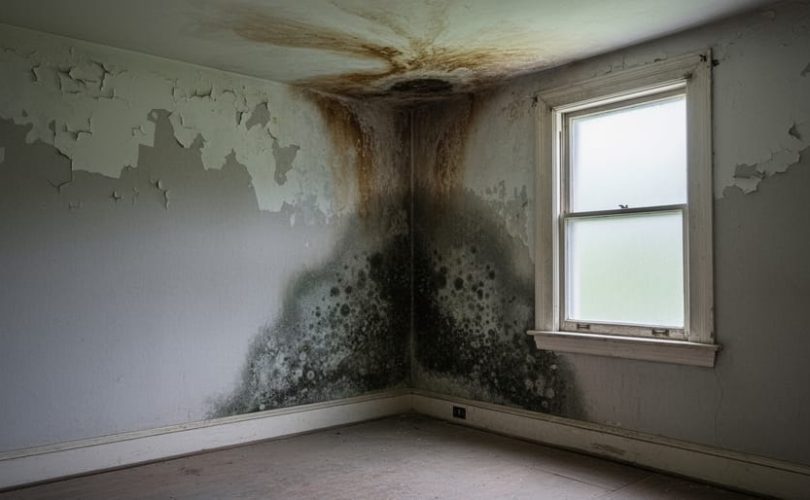
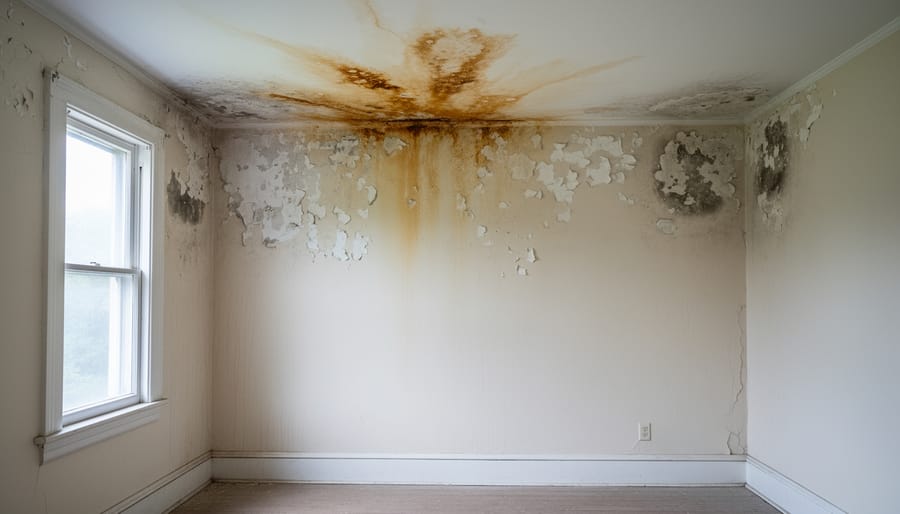
Most damp in an empty house comes from one of three things: a leak nobody is around to notice, no heating or airflow, or a blocked gutter or failed seal letting rain in. Start there. Check under sinks and around the boiler for drips, look at the ceiling below any bathroom or roof line for brown stains, and see whether the mould sits near a window, an outside wall, or a damp patch that keeps coming back. A musty smell on arrival, or water on the inside of the glass, tells you moisture is trapped and the house needs air.
If the water source is active, turn off the supply at the stopcock first. Then open windows, set up a dehumidifier if you can, and photograph everything before touching it. Those photos matter later for insurance and for what you tell buyers.
Stop and call a professional if the mould covers more than about a square metre, if you see sagging plaster or wet electrics, or if the roof or a pipe is the source.
This article walks you through sorting out what’s urgent, what’s safe to clean yourself, and what to document before you list. That includes cleaning choices for anyone with Multiple Chemical Sensitivities, since bleach and strong sprays can cause real harm. If the repairs feel like too much on top of grief and paperwork, there are also routes to sell an inherited house fast without fixing everything first.
First Look: Reading the Signs of Damp and Mould Before You Do Anything Else
Protecting Yourself on the First Visit
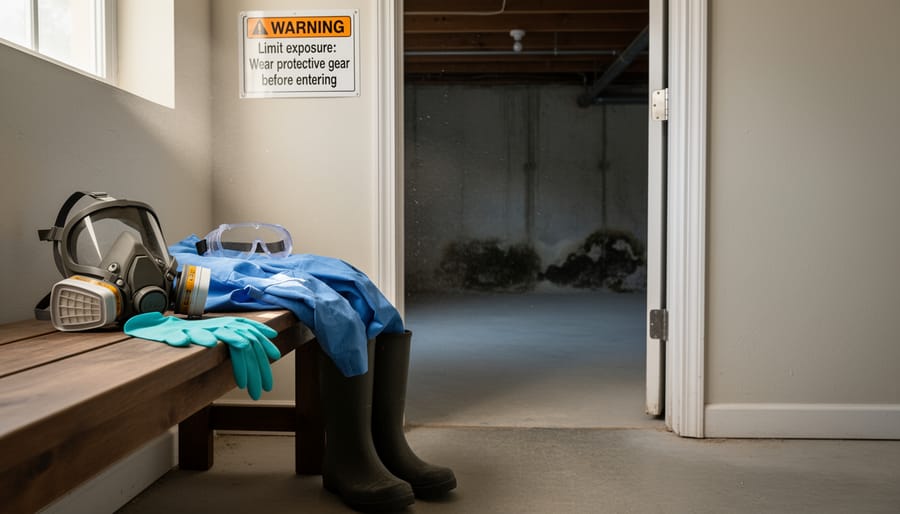
Before you step inside for the first time, open a few windows or the back door from the outside if you can, and let the house air out for a while. Empty homes hold stale, damp air, and giving it time to clear makes the first walkthrough easier on everyone.
When you do go in, wear a well-fitted mask rated for fine particles (an N95 or similar, snug against your face), along with gloves and eye protection. Keep the visit short. A quick look around to note what you see is enough for day one, and you can take photos as you go. Handling large mouldy areas is not a first-visit job: Health Canada recommends having a qualified professional deal with them.
People react to mould very differently. One person feels nothing, while another gets headaches, a tight chest, or a scratchy throat within minutes. If you start to feel unwell, leave. Nobody has to push through symptoms to prove they’re coping with a hard task. It also helps to understand how indoor air pollution can affect sensitive bodies, and how people diagnose and treat reactions like these.
If that describes you, it’s completely fine to skip the first visit and let someone else report back.
Why Empty Houses Get Damp: The Likely Causes
Common Culprits by Area of the House
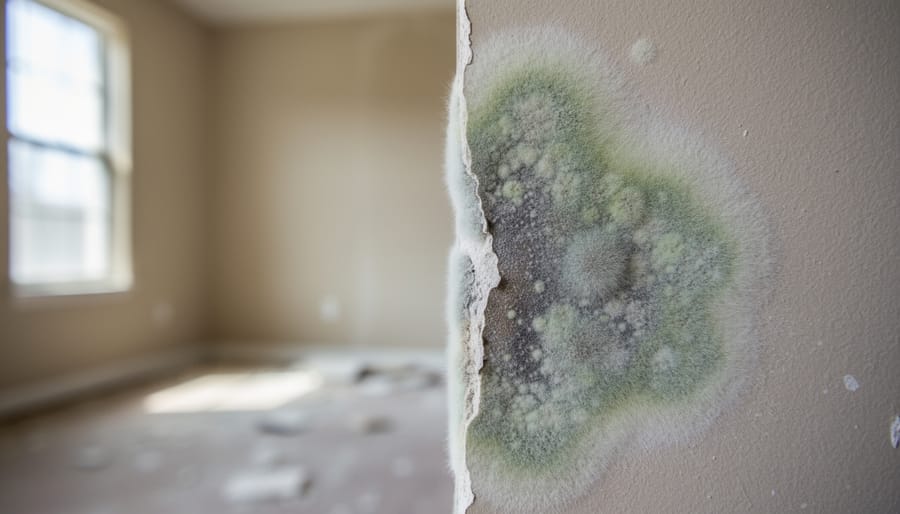
Once you know why empty houses get damp, it helps to check the usual trouble spots one area at a time. Most moisture problems in vacant homes trace back to a handful of places, and each has a typical cause.
- Roof and attic: Missing shingles or failed flashing let rain in, leaving brown stains on ceilings or darkened, damp insulation.
- Gutters and downspouts: Clogged or broken ones spill water down exterior walls, showing up as streaks, peeling paint, or damp patches inside.
- Bathrooms and kitchens: Slow plumbing leaks behind sinks, tubs, or appliances cause soft cabinet bases, lifting flooring, and dark spots near fixtures.
- Basement walls and floor: Groundwater seepage or a failed sump pump brings white mineral crusts, a musty smell, and a damp or darkened floor.
- Windows: Worn seals and winter condensation leave water beads on glass and mould along sills and frames.
- Closed-off rooms: Stale, unheated air traps humidity, so look for fuzzy growth behind furniture and on cold outer walls.
Start with the spots closest to plumbing and the roofline, since those leaks tend to run quietly for months when nobody is home. A flashlight and a slow walk through each room will tell you more than you might expect. Take photos as you go, and note anything that feels soft, looks stained, or smells musty so you have a clear list to share with a contractor or inspector later.
Step-by-Step: Dealing With Damp and Mould Before You List the House
Cleaning Choices: Gentler Options and What to Avoid
When you’re cleaning up mould, the products you reach for matter almost as much as the cleanup itself, especially if anyone in your family has MCS or other sensitivities. Many strong cleaners give off harmful fumes that linger in a closed-up house long after the job is done.
Bleach is a common first thought, but it’s often not recommended for porous surfaces like wood, drywall or grout. It can’t reach the mould growing beneath the surface, and it’s a strong irritant for the eyes, nose, throat and lungs. Mixing it with other cleaners adds further risk.
For hard, non-porous surfaces such as tile, glass, sealed countertops and metal, plain detergent and water is a gentler place to start. Scrub the surface, wipe it with clean water, then dry it completely. Unscented or low-fragrance detergents are the better pick for sensitive households, since perfumes can trigger reactions on their own.
Some materials can’t be cleaned well at all. Mouldy drywall, carpet, underpad and insulation usually need to be removed and bagged rather than scrubbed, because the mould sits deep inside them. Bag these items before carrying them through the house to keep spores from spreading.
If you hire a contractor, ask directly for low-odour products and for a plan that avoids heavy fragrance. It also helps to schedule the work so the house has plenty of time to air out before anyone sensitive goes back inside. Opening windows and running fans for several days is a reasonable goal, and a short wait is far better than a reaction.
Hiring Help: Mould Remediation, Inspections and Questions to Ask
A mould remediation contractor does the physical work: containing the affected area, removing damaged materials like soaked drywall or carpet, cleaning what can be saved, and drying the space. A home inspector, on the other hand, looks at the whole house and reports what they find, including signs of moisture, roof or plumbing problems, and likely causes. Neither one replaces the other. You may need an inspector to help locate the problem and a contractor to fix what it caused.
Before anyone starts work, ask for a written scope of work. It should say which rooms and materials are covered, how the area will be contained, how waste will be handled, what products will be used, how the space will be dried, and what the cost and timeline are. Ask whether the contractor will address the moisture source or only the visible mould. If someone with MCS will be involved in the sale or cleanout, ask for low-odour products and time to air out the house.
Get at least two or three quotes, and compare what each one actually includes, not just the price.
You may be offered lab testing, but it isn’t always needed. If you can see or smell mould, the next step is the same either way: find and fix the water source, then remove and dry the damage. That matters far more than any lab result.
Selling an Inherited House With a Damp or Mould History: What You Need to Handle
Documents and Records to Keep
Good paperwork protects the estate and gives buyers confidence that the problem was handled properly. Start a single folder, paper or digital, the day you first walk in, and keep adding to it as work gets done. If you or someone helping you has MCS, a shared online folder also means fewer trips into the house, and our MCS resources can point you to ways to keep that process manageable.
Here is what to collect:
- Inspection reports from any home inspector or moisture assessor.
- Written remediation scopes of work and the contractor’s final sign-off.
- Invoices and receipts for every repair, from roof patches to plumbing fixes.
- Dated photos taken before, during, and after cleanup.
- Moisture readings, with the date, location, and who took them.
- Your check-in notes from each visit while the house sits listed.
Back everything up somewhere separate from the house. When it’s time to sell, your lawyer or realtor can tell you which of these belong in the disclosure package, and a clear paper trail often makes that conversation much easier.
A Family’s Story: Cleaning Out a Parent’s Damp House With MCS in the Family
What follows is a composite story, drawn from the kinds of situations families describe, not one real person’s account.
Maya has Multiple Chemical Sensitivity. When her mother passed away, she inherited the family home, which had sat empty through a long winter. A relative who stopped by reported a strong musty smell coming from the basement. Maya knew she couldn’t be the one to go down there.
She started by setting a clear boundary: she would not enter the house until the work was finished. Her brother did the first walkthrough with a fitted mask and took photos for her to review from home. An aunt handled the key and the mail. Maya made the decisions, and other people did the physical work.
They hired a mould remediation company after getting two written quotes. Maya asked each contractor about the products they used and requested low-odour options, with the work scheduled so the house could air out for several days before anyone sensitive returned. The crew removed the soaked drywall and carpet, fixed a leaking window well, and dried the space out. Maya also called a real estate lawyer to understand what she would need to disclose to a buyer and which receipts and reports to keep.
She reached out to Environmental Health Canada for guidance as well, and found people who understood her situation and could point her toward resources for her own health and for the legal questions ahead.
The house sold the following spring. Maya never had to stand in that basement, and she kept her health, her records and her peace of mind.
Keeping the House Dry Until It Sells: Prevention
Cleanup is only half the job. An empty house can pick up moisture again within weeks, so the stretch between finishing the work and closing the sale needs a steady routine. The goal is simple: keep air moving, keep the building from getting cold and damp, and catch small problems before they spread.
In cold months, keep the heat on low and steady. A constant, modest temperature works better than letting the house freeze and then blasting the furnace, because big swings encourage condensation on walls and windows. Many people also ask their insurer about heating requirements for vacant homes, so it’s worth checking your policy.
Here is a recurring checklist you can adapt to the house:
- Keep the heat on at a low, steady temperature during cold weather.
- Open windows briefly on dry days, or run fans, to air out each room.
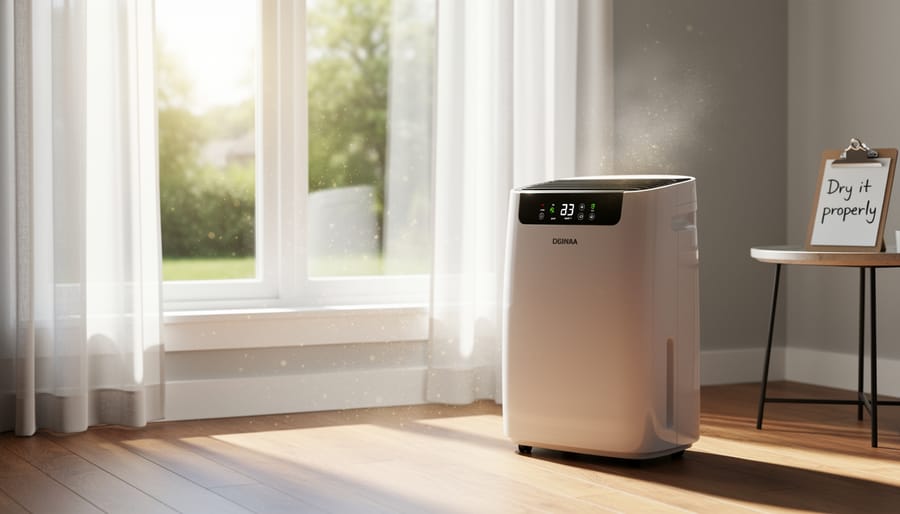
- Use a dehumidifier in the basement or other damp-prone spots, and empty it often.
- Check ceilings, walls, and basement floors for new stains or wet patches after every storm.
- Clear gutters and downspouts so water drains away from the foundation.
- Clear heavy snow and ice from roof edges to prevent water backing up under shingles.
- Visit at least every week or two, or hire a check-in service if you live far away.
If anyone with MCS is helping, ask them to stay out of the house and let a relative, friend, or paid service handle the visits.
Finally, keep notes of every check. A simple log with the date, who visited, what they saw, and any photos takes a minute to fill in. It shows buyers and insurers that the home was looked after, and it helps you spot patterns, such as a corner that feels damp every spring, before they turn into costly surprises.
Finding damp and mould in a house you’ve just inherited is stressful, but you’re far from alone, and it’s usually more manageable than it first appears. The key is taking things in order. Protect your own health first, then find and stop the water, dry the space out, and clean or remove affected materials properly. Keep your reports, photos and receipts together as you go, and check with a real estate lawyer or realtor about what you need to disclose before you list.
If you live with Multiple Chemical Sensitivity, or you’re caring for someone who does, give yourself permission to step back. You don’t need to be the one in the basement with a spray bottle. Lean on family, hire professionals, and ask for low-odour methods. And if you need support, resources or referrals, Environmental Health Canada is there to help you find your footing.