
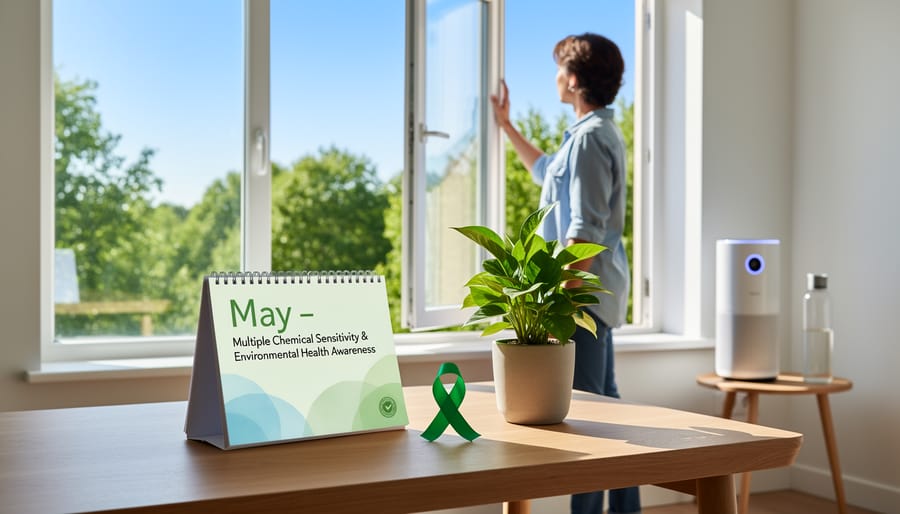
Mark your calendar with May Environmental Illness Awareness Month and August Food Allergy Awareness Month as prime opportunities to share your MCS story when your health allows. These designated periods create natural openings for conversation and education without requiring you to justify why chemical sensitivities matter.
Choose low-energy advocacy methods that respect your physical limitations. Write a brief email to your city councillor requesting fragrance-free policies in public buildings. Share a single social media post from your phone while resting. Submit a short letter to your local newspaper editor during awareness months when media outlets actively seek relevant content. Each small action plants seeds of understanding without triggering symptom flares.
Connect with existing advocacy networks rather than building efforts from scratch. Join online MCS support groups where members coordinate awareness campaigns you can support with minimal energy expenditure. Forward pre-written materials to your healthcare providers, family members, or workplace contacts. Collective advocacy multiplies individual voices while reducing the burden on any single person.
Document your experiences in writing during symptom-free periods to create resources for future awareness activities. A one-page personal story about how fragrance-free spaces improve your quality of life becomes a reusable tool for educating others. These prepared materials allow you to participate in awareness months even when active engagement feels impossible.
Time your advocacy around your symptom patterns rather than forcing participation during designated months if they coincide with difficult periods. Authentic, sustainable advocacy that honors your health needs creates more lasting impact than pushing beyond your limits. Your wellbeing remains the foundation for meaningful change, not an obstacle to overcome.
Why Education Awareness Months Matter for the MCS Community
Breaking Through the Invisibility Barrier
Living with Multiple Chemical Sensitivity presents a unique challenge: your condition is real, your symptoms are debilitating, yet nothing about your illness is visible to those around you. When someone sees a wheelchair or a cast, they understand limitations without explanation. With MCS, you face constant misunderstanding, skepticism, and the exhausting task of explaining why you cannot enter certain buildings, use standard products, or participate in everyday activities.
This invisibility creates barriers in every aspect of life. Employers may question accommodation requests for fragrance-free workplaces. Healthcare providers unfamiliar with MCS might dismiss symptoms as psychological. Family members struggle to understand why their perfume or laundry detergent causes you genuine physical distress. Friends may feel hurt when you decline invitations, not grasping that exposure to chemicals in restaurants or homes could leave you bedridden for days.
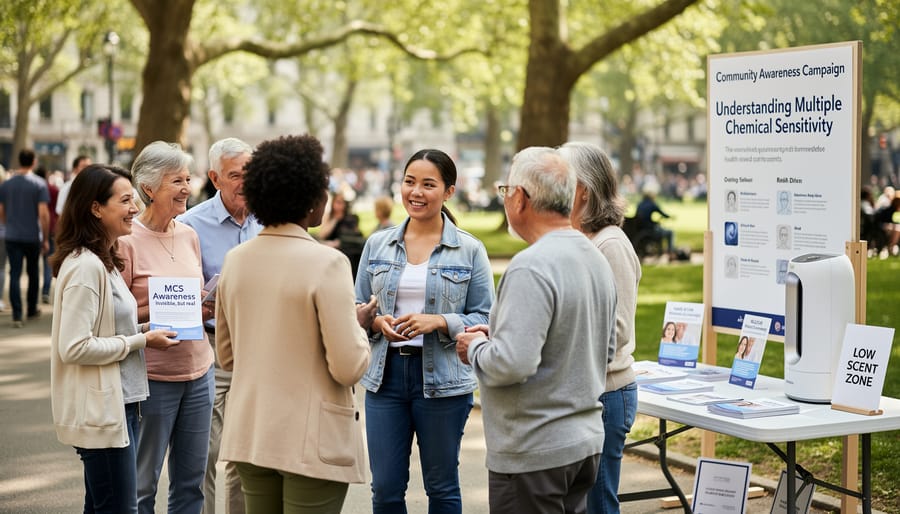
Awareness months serve as crucial opportunities to break through this invisibility barrier. They provide a designated time when media outlets, health organizations, and communities focus attention on environmental health issues. During these periods, your voice gains amplification. Sharing your story becomes part of a larger conversation, lending credibility and context to your experience.
Consider Maria’s story: after years of having her MCS dismissed, she shared her journey on social media during Environmental Health Awareness Month. Her workplace wellness committee reached out, asking how they could create a safer environment. Sometimes, visibility simply requires the right moment when people are ready to listen and learn.
Creating Safe Spaces for Conversation
Awareness months create a valuable opportunity for people living with Multiple Chemical Sensitivity to share their stories within a context that feels legitimate and purposeful. Rather than worrying about being perceived as complainers or difficult, individuals with MCS can frame their experiences as educational contributions during these designated times.
These special months provide a natural opening for conversations that might otherwise feel awkward or forced. When someone mentions Environmental Illness Awareness Month or a related observance, it gives you permission to say, “Actually, I live with chemical sensitivities, and here’s what that means for me.” This framework normalizes the discussion and positions you as an educator rather than someone making demands.
The social acceptability of awareness months also helps family members, caregivers, and advocates speak up on behalf of loved ones with MCS. They can share information about accommodations and environmental health without seeming overprotective or unreasonable. For example, a parent might post about fragrance-free policies during an awareness month, reaching friends and community members who would be receptive to learning.
This supportive environment encourages honest dialogue about challenges like accessing healthcare, maintaining employment, or participating in community activities. When your experiences align with a recognized awareness effort, others are more likely to listen with empathy and genuine interest in understanding your daily reality.
Key Education Awareness Months for MCS Advocacy
May: Environmental Health Month and MCS Awareness Month
May holds special significance for the MCS community as both Environmental Health Month and Multiple Chemical Sensitivity Awareness Month. This dual recognition creates a natural opportunity to connect individual experiences with broader environmental health concerns, helping the public understand how chemical exposures affect sensitive individuals and communities at large.
May was chosen strategically as spring brings increased chemical use in many communities. Lawn care products, pesticides, and renovation projects become more common, making it an ideal time to educate neighbors and local businesses about safer alternatives. The timing also coincides with when many people with MCS experience heightened symptoms due to these seasonal exposures.
Throughout May, organizations typically focus on sharing educational materials, hosting accessible virtual events, and encouraging local advocacy efforts. Many communities see increased media coverage about environmental health topics, providing valuable opportunities to share personal stories and raise awareness about MCS.
For individuals with MCS, May offers a supportive framework for speaking up. You might share information on social media, write a letter to your local newspaper, or simply have conversations with friends and family. Even small actions contribute to greater understanding. Success stories from previous May campaigns show that when people with MCS share their experiences during this designated month, communities often respond with increased willingness to adopt fragrance-free policies and chemical-reducing practices.
October: National Disability Employment Awareness Month
October marks National Disability Employment Awareness Month, offering a powerful platform to advocate for workplace accommodations that support individuals with MCS. Many people with MCS can work successfully when employers implement reasonable adjustments like fragrance-free policies, improved ventilation systems, or remote work options. This month provides an ideal opportunity to educate employers about MCS as an environmental disability and discuss practical solutions.
Consider sharing your story with human resources departments or employee resource groups, emphasizing how simple changes can create inclusive workplaces. If direct conversations feel overwhelming due to chemical exposures in office environments, written communication or virtual meetings can be equally effective. One success story involves Sarah, who worked with her employer during this awareness month to establish a scent-free zone in her department, enabling her to continue her career while managing her sensitivities.
You might also connect with disability advocacy organizations that can amplify your message and provide templates for workplace accommodation requests. Even small actions, like posting about workplace accessibility on social media or sharing educational materials with colleagues, contribute to broader understanding and acceptance of MCS in professional settings.
Other Relevant Awareness Opportunities
Beyond the primary awareness months, several other observances throughout the year offer valuable opportunities to educate others about Multiple Chemical Sensitivity. May is National Asthma and Allergy Awareness Month, providing a natural connection point since MCS shares some overlapping symptoms and triggers with these conditions. This month is ideal for highlighting how chemical exposures can worsen respiratory symptoms and why fragrance-free environments benefit many people.
October brings both Indoor Air Quality Awareness Month and National Environmental Health Month. These observances create perfect platforms for discussing how indoor pollutants, cleaning products, and building materials affect those with MCS. You can share practical tips about improving air quality that benefit everyone, not just those with chemical sensitivities.
April’s Earth Day (April 22) offers another advocacy opportunity, as conversations about environmental toxins and sustainable living naturally align with MCS concerns. Additionally, World Environmental Health Day in September allows for broader discussions about how environmental factors impact health.
By identifying these related awareness times, you can strategically plan your education efforts throughout the year, connecting MCS awareness to existing conversations that already have public attention and support.
Practical Ways to Participate in Education Awareness Months
Low-Energy Awareness Activities for Individuals with MCS
Living with Multiple Chemical Sensitivity doesn’t mean you can’t participate in awareness activities. There are many gentle, low-energy ways to make your voice heard during relevant awareness months.
Simple online actions can be powerful. Sharing pre-written articles or posts about MCS on social media takes just moments and reaches many people. You can do this from bed on difficult days, taking breaks as needed. Consider bookmarking helpful resources to share when you have energy.
Wearing a green ribbon during MCS Awareness Month in May is a quiet but visible way to spark conversations. You can attach it to your bag, clothing, or mobility aids without much effort.
One-on-one conversations often create the most meaningful change. When someone asks about your condition, even a brief explanation helps build understanding. You might prepare a short, simple description to share when you feel up to it.
Writing a brief personal story or letter to share with your doctor, employer, or local representative can make a real difference. Even a few sentences about your experience validates the challenges of MCS and educates others.
Remember, any contribution matters. Some days you might manage more, other days simply resting is your priority. Self-advocacy happens at your own pace, in ways that respect your health limitations and energy levels.

Family and Caregiver Advocacy Actions
Family members and caregivers play a vital role in raising awareness about Multiple Chemical Sensitivity. Your support can make a meaningful difference in creating safer environments and building understanding within your communities.
Consider sharing information about MCS at your workplace during relevant awareness months. This might involve simply sending an email to human resources about fragrance-free policies or posting information on company bulletin boards. Many workplaces welcome employee-led wellness initiatives, and you can frame MCS awareness as a workplace health and safety topic that benefits everyone.
If you have children in school, connect with teachers and administrators to present age-appropriate information about chemical sensitivities. Request fragrance-free classrooms or share simple accommodations that help students with MCS participate fully in school activities. Schools often appreciate parents who volunteer to educate about health topics affecting their student body.
Community outreach doesn’t require large events. You can distribute information at your local library, community center, or faith community. Share resources through social media or neighbourhood groups, always being mindful of your loved one’s privacy preferences.
Success story: A caregiver in British Columbia successfully advocated for her local community center to adopt a fragrance-free policy by presenting straightforward information to the board, benefiting many residents with chemical sensitivities. Small, consistent efforts create lasting change while respecting your own energy and time limitations.
Partnering with Environmental Health Canada
You don’t have to navigate awareness months alone. Environmental Health Canada offers valuable support and ready-made resources that can significantly reduce the effort required to participate meaningfully in advocacy activities.
Their website provides downloadable factsheets, infographics, and educational materials specifically about chemical sensitivities and environmental health issues. These materials are already designed for public education, saving you the energy of creating content from scratch. Many resources are available in both English and French, making them accessible across Canada.
Consider reaching out to Environmental Health Canada before major awareness months to inquire about available workshops, webinar series, or virtual events. These organized activities provide structure and community support, which can be especially helpful when your energy is limited. Participating in their existing initiatives means your voice joins a larger chorus, amplifying impact without requiring you to lead efforts yourself.
They also maintain contact information for regional representatives who understand the unique challenges of MCS. These connections can be invaluable when seeking guidance on local advocacy approaches or looking for others in your area who share similar concerns. By partnering with established organizations, you transform isolated efforts into coordinated action, making your participation more effective while respecting your health limitations.
Success Stories: When Awareness Makes a Real Difference
Awareness campaigns during designated months have created meaningful change for people living with Multiple Chemical Sensitivity. These success stories demonstrate that education and advocacy efforts really do make a difference.
Sarah, a teacher in Ontario, used Environmental Illness Awareness Month in August to educate her school administration about MCS. She shared information through emails and arranged a brief virtual meeting with human resources. Within three months, her workplace implemented a scent-free policy for her classroom wing and provided air purifiers. Sarah’s colleagues became supportive allies, switching to unscented products voluntarily. Her principal even included MCS information in the school’s wellness newsletter, reaching hundreds of families.
In British Columbia, a local MCS support group collaborated with their municipal government during Disability Employment Awareness Month in October. They shared personal stories and practical accommodation examples. The campaign resulted in the city updating its workplace accommodation policies to specifically include chemical sensitivities. Two individuals with MCS subsequently secured remote work arrangements that allowed them to maintain employment while managing their health needs.
James from Alberta participated in Mental Health Awareness Week by sharing how isolation from MCS affected his mental wellbeing. His honest social media posts reached his extended family and former coworkers. The response surprised him. His sister made her home fragrance-free so he could visit for the first time in years. A former colleague organized a scent-free outdoor gathering, reconnecting James with friends he thought he’d lost forever.
A healthcare clinic in Manitoba participated in National AccessAbility Week by training staff about MCS accommodations. They created a scent-free waiting area, scheduled first-morning appointments for sensitive patients, and educated all employees about avoiding fragranced products. Three patients with MCS who had previously delayed medical care returned for necessary treatment.
These stories share common elements: someone took a small step during an awareness month, shared accurate information with specific audiences, and requested concrete changes. The results weren’t always immediate, but persistence paid off. Each success, whether a workplace policy change or a family member understanding the condition better, improved quality of life.
These victories remind us that awareness efforts matter. When people understand MCS, they often want to help. Designated awareness months provide natural opportunities to start these important conversations, leading to real accommodations and genuine support that transform daily life for people living with chemical sensitivities.

Creating Your Personal Awareness Campaign
Identifying Your Primary Audience
Understanding who needs to learn about MCS in your life helps you focus your energy where it matters most. Start by considering your daily interactions and challenges. Does your workplace struggle to accommodate your needs? Are family members dismissive or confused about your symptoms? Do healthcare providers seem unfamiliar with MCS?
Create a simple list of people or groups who directly impact your ability to live safely. Your primary audience might include your immediate family who shares your living space, an employer who controls your work environment, or medical professionals who guide your care. These are the people whose understanding can significantly improve your quality of life.
Consider where resistance or misunderstanding causes the most harm. Perhaps your landlord refuses to address chemical exposures, or extended family members use fragrances at gatherings. Prioritize those whose actions most affect your health and wellbeing.
Remember, you don’t need to educate everyone at once. Focus on one or two key relationships or situations during awareness months. A supportive spouse who becomes better informed can then help educate others, multiplying your impact without depleting your limited energy. Your advocacy is most effective when directed at people who have both the power and willingness to make meaningful changes in your environment.
Preparing Your Message and Materials
Creating effective educational messages begins with keeping things simple and personal. When talking about Multiple Chemical Sensitivity, focus on one or two key points rather than overwhelming people with information. For example, you might explain that MCS means everyday products like perfumes or cleaning supplies can cause serious health reactions, making it difficult to participate in normal activities.
Start by gathering reliable resources from trusted organizations. Health Canada’s environmental health section offers fact sheets and guidelines about chemical exposures. Provincial health authorities often provide accessible materials about indoor air quality and safer product choices. The Canadian Centre for Occupational Health and Safety also maintains helpful resources that explain chemical sensitivities in straightforward terms.
When preparing materials, consider your audience and your own energy limits. A simple email explaining your needs works just as well as a formal presentation. Personal stories resonate powerfully—sharing how fragrance-free environments allow you to attend appointments or visit family helps others understand the real-world impact.
Keep printed materials minimal and fragrance-free. A single-page fact sheet with bullet points and a clear call to action is often more effective than lengthy documents. Remember, your lived experience is your most powerful educational tool. Speaking from the heart about daily challenges and necessary accommodations creates understanding in ways that statistics alone cannot achieve.
Education awareness months aren’t obligations to add to your already full plate—they’re opportunities to speak your truth and connect with others who understand. Whether you share a single post on social media, have one conversation with a neighbor, or simply wear a supportive color, your participation matters. These small actions create ripples that extend far beyond what you can see.
Living with Multiple Chemical Sensitivity means you already navigate a world that doesn’t always understand your needs. Every time you explain your condition, request accommodations, or share your experience, you’re already doing awareness work. Designated awareness months simply provide an extra spotlight on these important conversations, giving your voice additional reach and context.
Remember that your energy is precious, and there’s no minimum requirement for making a difference. Some months you might feel able to organize an event or write letters; other times, sharing a resource or resting to preserve your health is the most meaningful choice. Both are valid contributions to building a more understanding society.
You don’t have to advocate alone. Environmental Health Canada offers support, resources, and a community of people who understand your journey. Your stories matter—they help health professionals recognize symptoms earlier, encourage researchers to pursue better solutions, and remind other individuals with MCS that they’re not alone.
Start where you are. Use what you have. Do what you can. That’s enough, and it makes a genuine difference.